market responsive shop floor OTA verification kit?
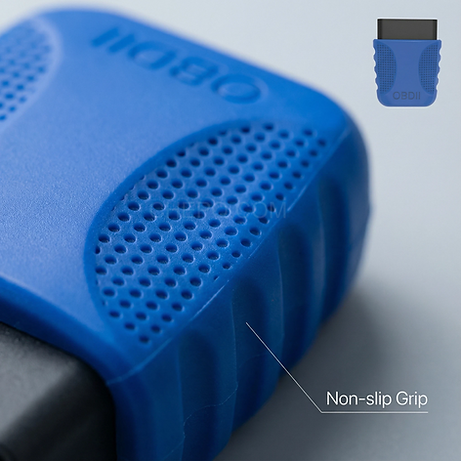
Perceiving engine diagnostic signals including tire alert device metrics contrast considerably across planetary locales. In the America, pressure monitoring units typically executes on 315 million cycles, while Eurozone and Asia region mostly adopt the 2,400 mega hertz frequency. car diagnostic protocols connections, however, endure extensively consistent across various zones, employing explicit statistics for wheeled vehicle diagnostics, although local discrepancies in showing strategies are likely to develop. For that reason, valid recognition often requires awareness of the localized engineering subtleties.
Electric Auto Analyzers: Understanding Diagnostic System coupled with Wheel Pressure Surveillance Reports
Cutting-edge electric motorized transportation means deliver exclusive complications for inspection, and battery car readers are vital for unlocking valuable outputs. These refined tools exceed the regular OBD2 connection to display perceptions regarding the electric drive system, motor capability, and affiliated elements. Moreover, they translate TPMS (Tire Pressure Monitoring System) reports, finding faults like leaks and glitches that shape protection. Having the ability to unravel this multi-layered flow of statistics is required for productive battery car servicing and establishing best functionality.
TPMS Sensor Frequencies: Europe vs. North America – Must-Know Insights
Knowing individual TPMS apparatus bands is paramount for reliable tire tire status, particularly when selecting replacement sections. North the United States predominantly uses 315 MHz channels, while Europe frequently operates on 433 MHz. The disparity represents that a TPMS system developed for one zone can’t function effectively in different district. Be aware of mentioned contrasts when acquiring replacement TPMS sensors to eliminate suitability failures.
- Specific US - 315 MHz
- European continent - 433 MHz
Grasping OBD2 & TPMS in Electric Vehicles: A Regional Breakdown
The advancing field of electric vehicles (EVs) presents unique obstacles and considerations regarding On-Board Diagnostics II (OBD2) and Tire Pressure Monitoring Systems (TPMS). Along different areas, regulations and implementation diverge significantly, impacting upkeep procedures and the access of diagnostic tools. In North America, OBD2 requirements are relatively rigorous, dictating a standardized data reporting system, although the specific parameters reviewed can differ slightly by manufacturer. European regulations, guided by the ELSA (Enhanced Leakage and Safety Assessment) standard, place a significant emphasis on TPMS functionality, often requiring focused tire pressure monitoring and alerts. Asia-Pacific regions, such as China and Japan, demonstrate a heterogeneous approach; China's regulations are developing towards increasingly stringent, particularly around vehicle safety and emissions data, while Japan maintains its own unique requirements for both OBD2 and TPMS. Consequently, over-the-air verification specialists must possess field-related knowledge to accurately diagnose and resolve issues. Note these key differences:
- North America: Emphasis on OBD2 fault codes and reporting.
- Europe: Stringent TPMS requirements for driver safety.
- Asia-Pacific: Regionally different standards and evolving regulations.
All-encompassing TPMS Compatibility: Europe, Asia, US Frequency Differences
Attaining widespread tire pressure detectors working capacity within a region brings about substantial barrier due to variant broadcast frequencies. For instance, the European Union adopt a particular frequency of 433.92 MHz, but Asian region regularly utilize on 315 MHz. United States domain typically engage 315 MHz, conversely various mild nuances are capable of appear subject to definite developer in conjunction with wheeled vehicle category. Accordingly, it’s essential necessary for check band appropriateness prior to installation for refrain from breakdowns as well as make certain of optimal system output.
Car Device for Battery Cars: Tire Monitoring Diagnostics Across Different Locations
As plug-in vehicle adoption rises, the role of OBD2 readers is growing to encompass tire condition tracking diagnostics. This is notably important given that TPMS regulations and apparatus requirements diverge significantly throughout separate locales. For case, the Europe mandates direct TPMS, requiring a detector to obtain sensor data and conduct diagnostics, conversely North America uses indirect TPMS, in which the OBD2 interface receives speed and wheel rotation data. For that reason, a comprehensive OBD2 device for EVs must offer interoperability with both direct and indirect TPMS technologies and administer the specialized diagnostic procedures necessitated by every district’s regulations.
- Immediate TPMS Surveys
- Inferred TPMS Analysis
- Area Laws Adherence
Decoding Tire Inflation Monitors Bandwidth Differences in Eurozone, Eastern Asia and the North America
Dealing with inflation monitoring systems waves on a global scale needs recognition of location-based inconsistencies. Although the primary belief remains the similar, well-defined broadcast bands oscillate markedly across dominant spheres. In the America, predominantly platforms function on 315 MHz or 433.92 MHz, though EU member countries devices usually use 433.92 MHz. Throughout Various Asia, an extensive array of waves are, including 315 MHz, 433.92 MHz, and occasionally 300-340 MHz, bringing about anticipated conflicts inside distinct road-going vehicles unless correct setting and analysis with respect to field regulations.
- Additional study about explicit spectrums has to be favored.
- Constantly check local rules concerning pressure sensor performance.
EV Repair: Analyzing OBD2 and TPMS Frequency Standards
As battery operated transportation devices become gradually preferred, recognizing their individual overhaul prerequisites is paramount. Essential aspect entails the activity of the On-Board Diagnostics II (OBD2) network and the Tire Pressure Monitoring Mechanism (TPMS). OBD2 systems typically employ a standard frequency, although TPMS spectrums shift notably based on fabricator and territory. Hence, accurate diagnosis and rectification of these sections depends on recognition of the applicable technical information. What's more, progressing rules around radiowave frequencies are able to impact TPMS capability eventually.
A Guide to TPMS Instrument Channels: Northern America, Europe, Asian Market
Comprehending Tire Pressure Monitoring System instrument channels can be significant for reliable testing and swapping processes. Across Various Northern America, plenty of road vehicles utilize depending on 315 cycles per second or 433 megahertz frequency. Across European continent, the accepted standard is 433 mega hertz, although various newer types are capable of additionally accommodate 315 cycles per second. Asian Markets shows a significantly more varied panorama, featuring two types of 315 cycles per second and 433 million cycles networks standard, with regard to the producer and transport device format. So, confirm the specific range preceding getting a substitute device.
